Shop by Category

- 0
Your Basket
Your basket is empty.
8c6d6e0e391b61f66042d776f30633db
Home › Car clip guides › Cable ties, hoses and washers
Small rubber and plastic lines in a car, such as windscreen washer hoses, vacuum lines and breathers, often split near a fitting or need a branch added. A plastic hose joiner is a quick fix.
A straight joiner connects two lengths of hose, for example to repair a split. A T-piece joins three, for example to run a washer line to two jets. See our hose joiners.
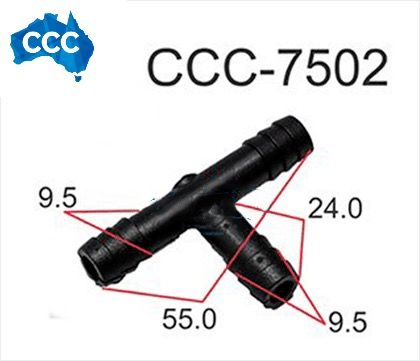
Barbed joiners go inside the hose, so match the barb to the hose's inside diameter. A barb that is too small will leak or pull out; one that is too big will be hard to fit and may split the hose. Each product lists the barb and body sizes shown on its photo.
Plastic joiners are for low-pressure lines. Do not use them on fuel, brake, power steering or coolant lines unless the part is rated for that use. Those lines need the correct fittings.
The size that matters is the inside diameter of the hose, because the barb goes inside it. If the hose end is still good, measure across the inside of the opening with a ruler or the tips of a vernier. If you only have the outside size and the wall thickness, the inside diameter is the outside size minus two wall thicknesses. Write the size down before you order, and compare it with the barb size on the product page.
For higher pressure or hydraulic lines, look at proper fittings such as our hydraulic swivels, and follow the vehicle or equipment manual.
| Product | Type and sizes marked on photo (mm) |
|---|---|
| CCS-7502 | T-piece: 55.0 long, 24.0 branch, 9.5 ends |
| CCS-7503 | T-piece: 48 long, 6.6 ends |
| CCS-7504 | T-piece: 39 long, 17 branch, 5 ends |
| CCS-7505 | T-piece: 31 long, 14 branch, 3 ends |
| CCS-7501 | Straight: 89.0 long, 9.1, 5.8, 4.0 ends |
| CCS-7500 | T-piece: 89.0 long, 40.0, 9.1, 5.8, 4.0 ends |
The "ends" figure is the barb size that goes inside the hose. Stepped barbs (for example 9.1, 5.8 and 4.0) fit more than one hose size.
Sizes are approximate, read from the measurement marks on our product photos. Always compare with your original part.
On small washer and vacuum lines a firm push fit is often enough, but a clamp or cable tie stops the hose working loose.
Sizes and fitting steps in our guides are general. Check your vehicle's manual for anything specific to your car. Questions? Call 0499 001004.
When buying 2 or more packets of the same item
| Qty | Tier 1 | Tier 2 | Tier 3 |
|---|---|---|---|
| 1 packet (25pcs) | $12.95 | $14.95 | $20.95 |
| 2+ packets (50pcs) | $11.95 | $13.95 | $19.95 |
| 4+ packets (100pcs) | $8.95 | $10.95 | $16.95 |
Price per packet. Packets sold in 25pcs per packet.
Pricing may change on each page of the website.
All pricing includes GST. All discounts received at checkout.